
Why Polyester Clothing Is Bad for Kids (And What to Choose Instead)
When you’re shopping for your child, you probably look for softness, durability, and cute designs.
But what about the fabric?
Polyester is one of the most commonly used materials in children’s clothing today. It’s everywhere — from pajamas and leggings to dresses and school uniforms. Large retailers rely on it heavily.
But just because it’s common doesn’t mean it’s harmless.
If you’re trying to make healthier, more sustainable choices for your family, here’s what you need to know about polyester — and why natural fabrics are a better choice for your child and the planet.
What Is Polyester?
Polyester is a synthetic fabric made from petroleum — yes, the same fossil fuel used to make plastic and gasoline.
It’s essentially plastic spun into thread.
Unlike natural fibers like cotton, linen, or wool, polyester does not come from plants or animals. It’s manufactured in chemical-heavy industrial processes.
And that’s where the problems begin.
Why Do Large Retailers Use Polyester?
Before we talk about the downsides, let’s be clear about why polyester is so popular in fast fashion and big-box stores.
Retailers use polyester because:
- It’s extremely cheap to produce
- It doesn’t wrinkle easily
- It holds bright dyes well
- It’s lightweight
- It resists shrinking
- It can be mass-produced quickly
For brands focused on high volume and low prices, polyester makes financial sense.
It allows companies to increase margins, keep prices low, and turn over inventory quickly.
But that lower cost often comes at a hidden price — one that affects your child’s health, comfort, and the environment.
1. Polyester Is Made From Plastic
Polyester is plastic.
When your child wears polyester, their skin is covered in a petroleum-based synthetic material that does not breathe the way natural fibers do.
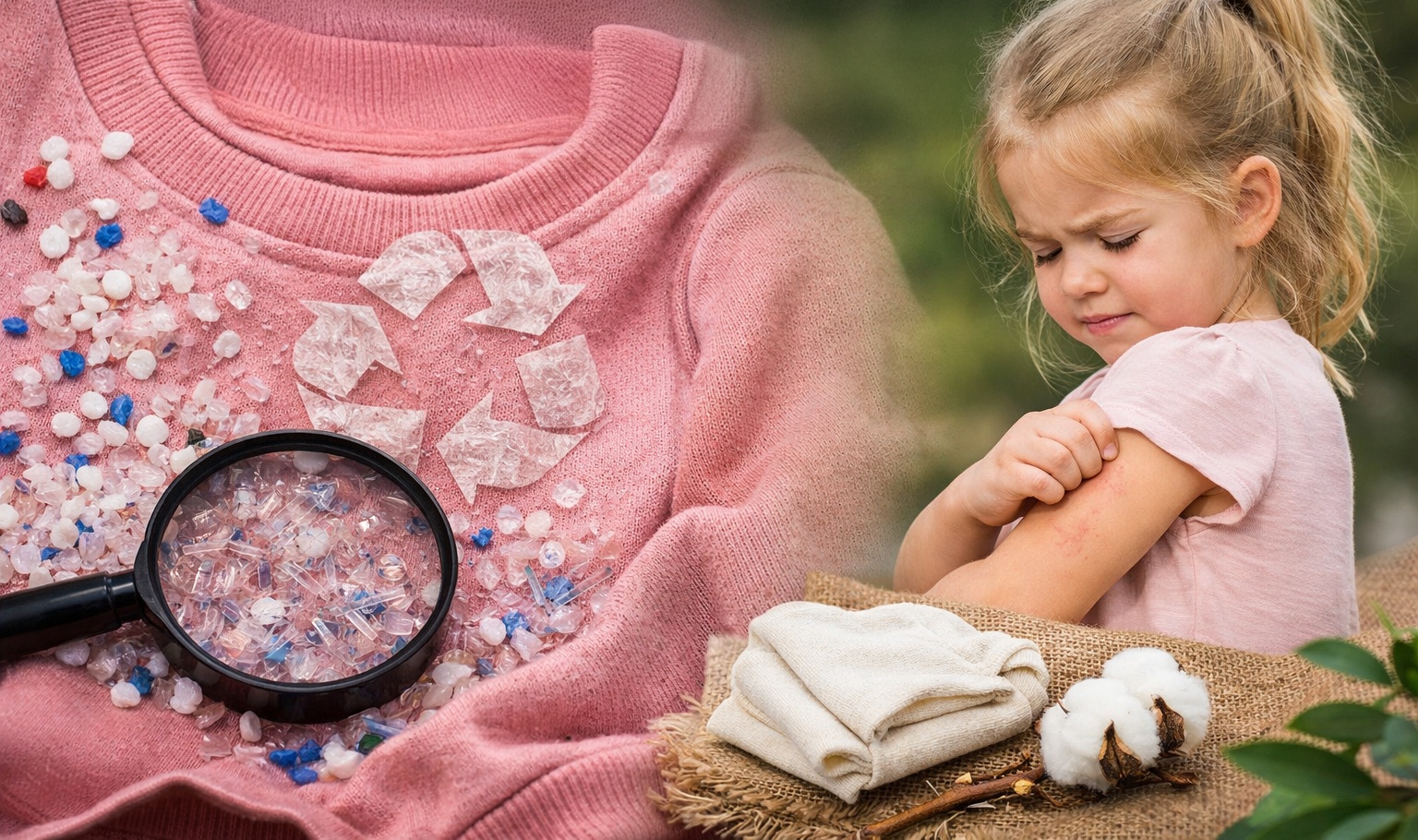
Unlike cotton, polyester traps heat and moisture against the skin. For kids — who run, sweat, and play hard — this can mean:
- Overheating
- Skin irritation
- Rashes
- Discomfort
Children’s skin is thinner and more sensitive than adults’. What they wear matters.
2. Polyester Sheds Microplastics
Every time polyester clothing is washed, it sheds tiny plastic fibers called microplastics.
These microplastics:
- Flow into waterways
- Enter oceans
- End up in fish and marine life
- Eventually make their way into our food system
Studies have shown that synthetic clothing is one of the largest sources of microplastic pollution in the world.
When we choose polyester, we contribute — often unknowingly — to long-term environmental damage.
Natural fibers biodegrade. Polyester does not.
3. Polyester Is Not Biodegradable
Polyester can take hundreds of years to break down in landfills.
Children outgrow clothes quickly. Fast fashion encourages constant replacement.
That means polyester kids’ clothing often ends up in landfills — where it will sit for generations.
Natural fibers like organic cotton decompose naturally. Polyester remains.
4. It Can Contain Chemical Finishes
Polyester garments are often treated with chemical finishes to improve:
- Stain resistance
- Wrinkle resistance
- Water resistance
- Flame retardancy
Some of these finishes may release volatile organic compounds (VOCs) or contain substances that sensitive children react to.
While regulations vary by country, the reality is that synthetic fabrics require chemical processing from start to finish.
Choosing simpler, natural materials reduces that chemical load.
5. It Doesn’t Support Sustainable Farming or Regenerative Practices
When you purchase natural fibers — especially organic cotton — you support agriculture.
When you purchase polyester, you support fossil fuel extraction.
Polyester production:
- Relies on petroleum
- Requires energy-intensive processing
- Contributes to greenhouse gas emissions
For parents trying to reduce their environmental footprint, fabric choice is one of the easiest and most impactful shifts you can make.
🌿 Why We Choose Bamboo & Cotton Instead
Unlike polyester, bamboo and natural cotton fabrics are breathable, gentle on sensitive skin, and free from petroleum-based fibers.
That’s why we design our handmade children’s clothing using premium natural materials — soft enough for everyday wear, durable enough to last.
But Isn’t Polyester Durable?
Yes, polyester is durable.
That’s part of the appeal.
However, durability doesn’t automatically equal sustainability.
A fabric that lasts but sheds microplastics, traps heat, and never biodegrades isn’t necessarily better — especially when natural fibers today are made to be both durable and breathable.
High-quality organic cotton, linen, and other plant-based fabrics can withstand childhood play while remaining soft, breathable, and environmentally responsible.
What Should You Choose Instead?
For children’s clothing, look for:
- Organic cotton
- GOTS-certified cotton
- Linen
- Bamboo (from reputable, responsibly processed sources)
- Wool for cooler climates
These materials:
- Allow skin to breathe
- Regulate temperature naturally
- Break down safely at end of life
- Avoid petroleum-based production
When you choose natural fibers, you’re choosing comfort, safety, and sustainability.
Why Fabric Choice Matters for Your Child
Children’s bodies are still developing.
Their skin absorbs more than adult skin. They regulate temperature differently. They move constantly.
Clothing should support that — not work against it.
At the end of the day, sustainable choices aren’t about perfection.
They’re about awareness.
When you understand what polyester is, why it’s used, and how it impacts the planet, you can make informed decisions for your family.
And that’s powerful.
The Bigger Picture
Fast fashion prioritizes cost and speed.
Sustainable brands prioritize long-term impact — on children, communities, and the planet.
Polyester makes financial sense for mass retailers.
But for parents who care about what touches their child’s skin and the world they’ll inherit, natural fabrics are worth it.
Ready to Choose Better for Your Kids?
At Year After Year, we create handmade bamboo and cotton children’s clothing that’s unbelievably soft and designed to grow with your little ones.
Small batch. Ethically made in Canada. Made to last.