
Best Fabric for Toddlers With Eczema (What Actually Helps Sensitive Skin)
If your toddler has eczema, you know how heartbreaking it can be.
The itching.
The flare-ups.
The sleepless nights.
While creams and prescriptions are often part of the solution, one major trigger is frequently overlooked:
Clothing fabric.
What touches your toddler’s skin all day matters more than most parents realize.
Let’s break down the best fabric for toddlers with eczema — and what to avoid.
Why Fabric Choice Matters for Eczema
Eczema (atopic dermatitis) weakens the skin barrier. That means your toddler’s skin:
- Loses moisture more easily
- Becomes irritated faster
- Reacts more strongly to friction and heat
- Is more sensitive to chemicals and dyes
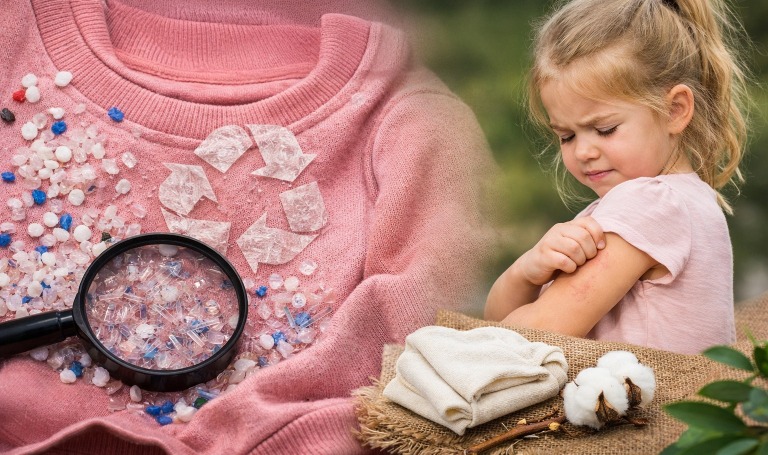
Certain fabrics can trap heat, cause sweating, and rub against already inflamed skin.
Others can soothe, breathe, and protect.
The right fabric reduces irritation.
The wrong one can trigger flare-ups.
The Best Fabric for Toddlers With Eczema
1. Organic Cotton (Top Choice)
If you’re choosing one fabric, choose organic cotton.
Why it works:
- Soft and breathable
- Allows airflow to prevent overheating
- Absorbs moisture without trapping heat
- Free from harsh pesticide residues (when certified organic)
- Gentle on sensitive skin
Organic cotton is especially helpful because it avoids the chemical residues often found in conventional cotton production.
Look for:
- GOTS-certified organic cotton
- Undyed or naturally dyed options
- Lightweight, breathable weaves
For toddlers who scratch at night, soft organic cotton pajamas can make a noticeable difference.
2. Bamboo (With Caution)
Bamboo fabric is often marketed for eczema — and it can feel extremely soft.
Pros:
- Silky texture
- Moisture-wicking
- Temperature regulating
However, most bamboo fabrics are heavily chemically processed into viscose or rayon.
If you choose bamboo:
- Look for closed-loop production (less chemical exposure)
- Choose reputable brands with transparency
It can be helpful, but not all bamboo is created equal.
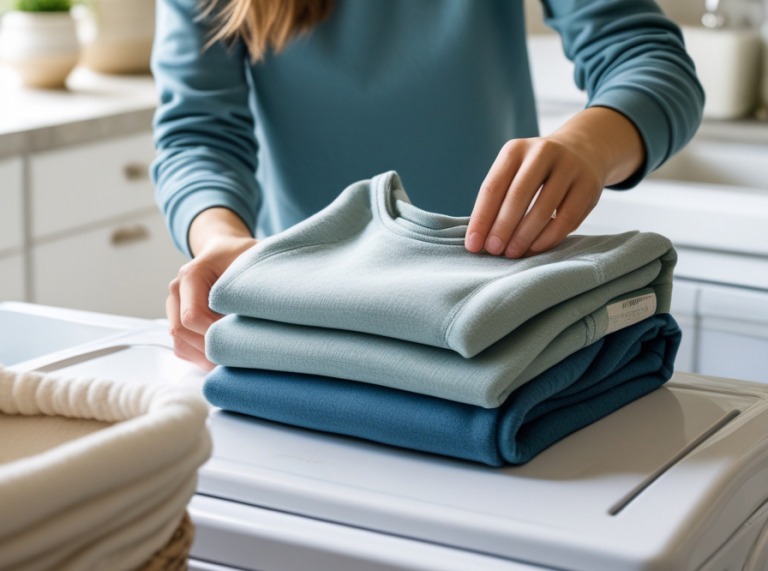
If you’re investing in high-quality bamboo kids clothing, proper care makes all the difference. Our oversized bamboo sweatshirts are designed to hold their shape and softness wash after wash.
3. Linen (For Warm Weather)
Linen is made from flax and is:
- Highly breathable
- Naturally moisture-wicking
- Great for hot climates
It has a slightly textured feel, so it may not work during active flare-ups — but it’s excellent for preventing overheating.
4. Silk (For Severe Cases)
Silk is sometimes recommended for severe eczema because:
- It reduces friction
- Feels cooling against skin
- Can help prevent scratching damage
However, it’s less practical for everyday toddler wear.
Fabrics to Avoid With Toddler Eczema
Not all fabrics are skin-friendly.
Here’s what to skip:
❌ Polyester
Polyester is synthetic and petroleum-based. You can read ALL about Polyester and why it is bad for kids’ clothing here.
It:
- Traps heat
- Reduces airflow
- Causes sweating
- Can increase irritation
Because it doesn’t breathe like natural fibers, it often worsens itching.
❌ Wool (During Active Flare-Ups)
Wool is natural, but it can feel scratchy and irritating against inflamed skin.
Some children tolerate ultra-fine merino wool, but during flare-ups, it’s usually best avoided.
❌ Rough Seams & Tight Elastic
Even the right fabric can irritate if:
- Seams are bulky
- Waistbands are tight
- Tags rub against skin
Look for:
- Flat seams
- Tagless designs
- Relaxed fits
Other Tips for Dressing a Toddler With Eczema
Fabric is only part of the equation.
Here’s how to reduce irritation even further:
✔ Wash new clothing before wearing
✔ Use fragrance-free, dye-free detergent
✔ Avoid fabric softeners
✔ Dress in breathable layers
✔ Choose lighter colors (less dye exposure)
The goal is to reduce friction, overheating, and chemical exposure.
Why Organic Cotton Is Often the Best Overall Choice
For most toddlers with eczema, organic cotton is the safest, simplest starting point.
It’s breathable.
It’s gentle.
It’s natural.
It doesn’t trap heat like synthetics.
And when certified organic, it reduces exposure to pesticides and harsh finishing chemicals.
That combination makes it ideal for sensitive, developing skin.
A Note for Parents
Eczema can feel overwhelming.
There’s no single magic fix — but small changes add up.
Choosing better fabrics is one of the easiest adjustments you can make today.
When you reduce what irritates their skin, you give it space to heal.
And sometimes, that’s the difference between a restless night and a peaceful one.
Looking for Eczema-Friendly Toddler Clothing?
Explore our collection of breathable, organic cotton essentials designed with sensitive skin in mind.
Because your toddler deserves comfort that supports healing — not irritation.
Q&A
What fabric is best for toddlers with eczema?
Organic cotton is typically the best fabric for toddlers with eczema because it is breathable, soft, and gentle on sensitive skin.
Is polyester bad for eczema?
Yes. Polyester can trap heat and moisture, which may worsen itching and irritation for toddlers with eczema.
Is bamboo good for eczema?
Bamboo can be soft and breathable, but quality varies. Look for responsibly processed bamboo fabrics.
Ready to Choose Better for Your Kids?
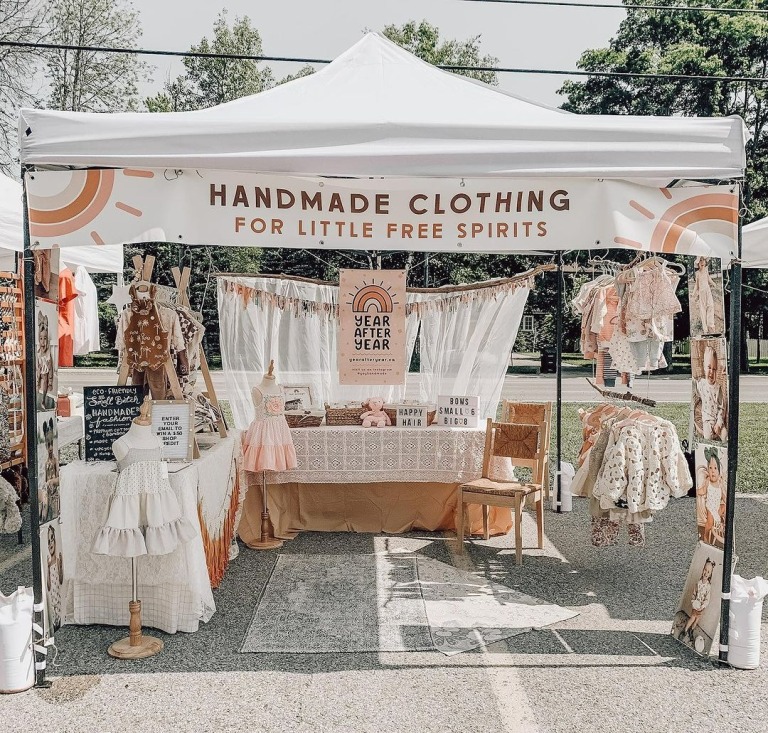
At Year After Year, we create handmade bamboo and cotton children’s clothing that’s unbelievably soft and designed to grow with your little ones.
Small batch. Ethically made in Canada. Made to last.